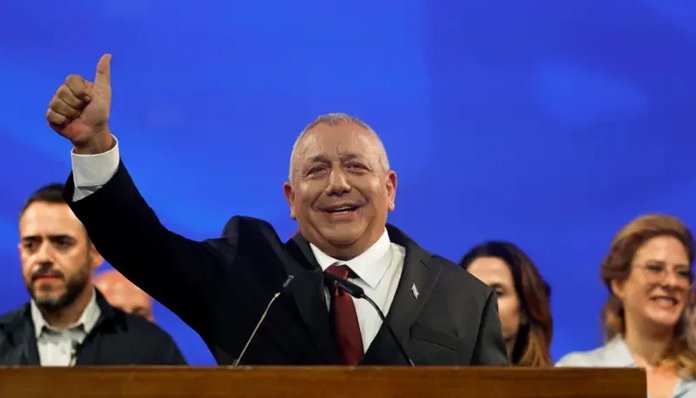
Results and exit polls continue to come in after Israel’s general election, and the opposition alliance, having made gains, has claimed that the public has clearly rejected Prime Minister Benjamin Netanyahu, who has held power for a long time, and his right-wing government.
According to Israel’s Central Elections Committee, voter turnout in the election was 77.7 per cent, the highest since 1999. By the close of polling at 10 pm, more than 5,695,000 citizens had cast their votes.
Reacting to the results, Israeli opposition leader Yair Lapid said: “The State of Israel saved itself today, and the Netanyahu government has suffered a historic and clear defeat.”
In a statement on social media, Yair Lapid stressed that the public has voted for change and that the first priority now must be forming a new ‘Zionist government’. Calling former prime minister Naftali Bennett the best partner, he said restoring the rule of law and trust in institutions is essential to overcoming the challenges facing the country.
Former army chief and opposition alliance leader Gadi Eisenkot also claimed in a speech to his supporters that voters have delivered their verdict against Netanyahu’s continued rule, and that he will soon try to form a new government.
He warned Netanyahu not to use national security for political purposes.
According to political observers, there are fears that Netanyahu may use the recent tension with Iran to disrupt the government-formation process and increase political uncertainty.
Orit Farkash-Hacohen, a leader of the former army chief’s party ‘Yashar’, told a British news agency that Netanyahu’s coalition bloc has suffered a heavy loss of about 20 seats, after which it is no longer in a position to keep a majority in parliament (the Knesset).
She said the Israeli public has firmly rejected Netanyahu’s leadership and chosen a new kind of leadership.
According to exit polls, the opposition alliance has a slight lead over Netanyahu’s bloc, but manoeuvring continues on both sides to reach the final magic number of 61 seats needed to form a government in the Knesset.