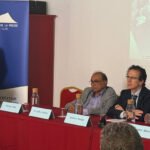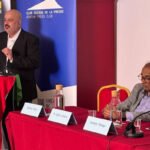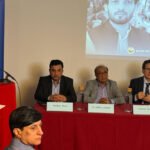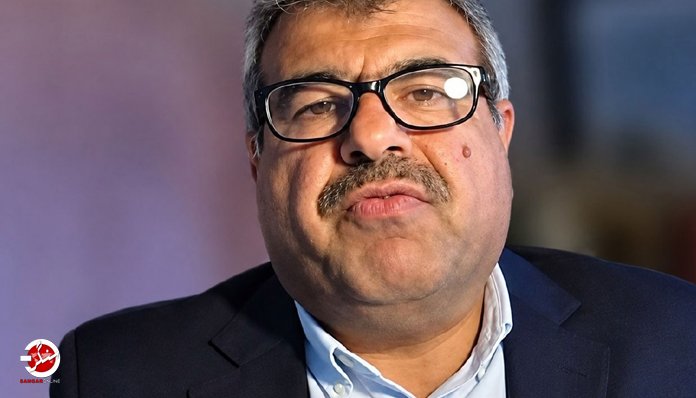
Afghan author and former ambassador to Iran Dr Ghafoor Liwal, addressing the BNM’s 12th Balochistan International Conference in Geneva, said human rights violations in Balochistan and Pashtun communities have not yet been properly understood internationally, and that information and awareness are a very important part of the struggle.
He said: one of the greatest concerns of the people of our region is the violation of human rights. This repression is faced by the people of Balochistan and the people of Afghanistan, and we are suffering it together. I want to free this nation from this terrible situation and share in the suffering of all oppressed people.
He said: we stand with humanity, whose children, women, elderly and other innocent and defenceless people lose their lives because of state policies, military offensives and crises. The Baloch have been suffering for years. For many years the Pashtuns too have been suffering because of Pakistan’s interference.
“Families have lost their loved ones. Innocent people live in fear. There is very little peace. And I hear reports of what happens in Balochistan: women and children are taken from their homes. The tortured bodies of many people are found later. Thousands of people are still forcibly disappeared: mothers and sisters, political and social leaders, activists, women and ordinary citizens.”
He said: there are also reports of torture and other grave human rights violations. But in my view another serious problem is that the world is not properly listening to these things.
“The free world still does not know enough about what is happening in Balochistan, the Pashtun homeland and Afghanistan. And perhaps even more important, many people around the world do not know what these people are asking for. So they do not always know what they are enduring, or why so many people are making such great sacrifices.”
He said: when we talk about defending human rights, we must work on two important fronts. At the local level we must help our people understand what is happening. The international community needs credible information about human rights violations, enforced disappearances, killings, torture and other injustices.
“We must help oppressed people understand their own rights: who is responsible when rights are violated; what they can do; where free expression is, where justice is. And most importantly, people must know that they have the right to speak, to protest and to stand up against injustice.”
He said it is difficult for people living under pressure and repression to do all this work themselves. They lack protection. They cannot reach international institutions. They cannot speak openly. That is why I believe intellectuals, journalists, writers, activists and patriotic Afghan communities living abroad have an important responsibility. We must become the voice of those who cannot speak freely.
He said this is especially important today. We live in an age of fast communication. In a sense, every person can become a small media organisation. We all have the ability to share information. We can use social media, radio, YouTube, interviews and other forms of communication. But we must remember one important thing: we must get the right message to the right people at the right time. Our information must be effective, factual and understandable. That is, we need a strategy. Content really matters in raising the voices of nations under the pressure of occupation and political violence.
Turning to literature, he said some say poets and writers are the living documents of a whole nation. Their feelings and national ideas can give hope. They can bring people together. They can help a nation strengthen its identity, dignity and future. He cited Khushal Khan Khattak and other poets, writers and national figures.
“If we bring our people together with these ideas of dignity, unity, knowledge and feeling, we can build a strong front. I think our literature should be an important part of our struggle. Words, dreams, literature, journalism, history and art have all played an important role. They can change minds. They can give people hope and tell the world their history and our people’s suffering. The human rights struggle is not only a struggle for facts. It is also a struggle for an audience. It is a struggle for truth. It is a struggle for education. And it is a struggle for someone’s voice to be heard.”