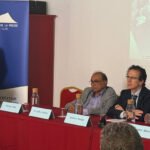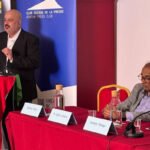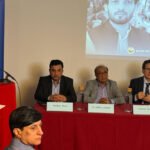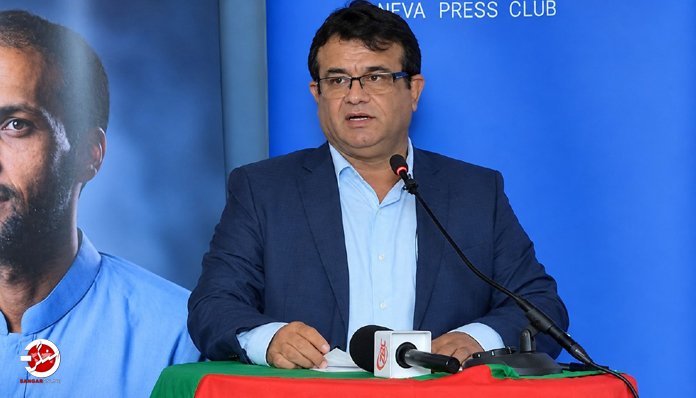
Baloch National Movement (BNM) chairman Dr Naseem Baloch, addressing the 12th Balochistan International Conference in Geneva, said generation after generation of Baloch political activists, students, doctors, teachers, lawyers and ordinary citizens in Balochistan have faced imprisonment, enforced disappearance, exile and death, while for decades attempts have been made to suppress the Baloch national question through military force, political engineering, enforced disappearances, imprisonment and control over Balochistan’s resources.
He said that despite this the Baloch nation’s political question has not ended, and new generations are continually entering political life.
Addressing human rights defenders, representatives of various nations and organisations, members of the media and Baloch political activists in Geneva, the BNM chairman said the conference is not merely another political gathering but an attempt to bring to the world the voice of those who are facing the human consequences of the ongoing crisis in Balochistan.
He said: we have not gathered here merely to hold another conference. We are here because behind every report, every photo and every statistic from Balochistan there is a human being.
According to him, a mother is waiting for her missing son, a child is growing up without a father, and a family searching for their loved one from one prison to another and one court to another is asking a simple question: where is our loved one?
He said there are also people who have paid with their lives the price of refusing to stay silent.
In his speech, the BNM chairman also remembered recently killed BNM central committee member Dr Abdul Rasheed, known as Dr Nokap Baloch. He said losing Dr Abdul Rasheed on 10 September is a fresh shock for the BNM.
“His killing is still very fresh for us. It is not something I can talk about merely as a political event. He was our colleague. He was our comrade. He was a man who lived his life among his people.”
Holding Pakistani state agents responsible for Dr Nokap Baloch’s killing, the BNM chairman said armed men came to him disguised as patients and killed a man whose profession was to treat people.
He said Dr Nokap Baloch was a political activist, physician and teacher who dedicated his whole life to the cause of Baloch national freedom, service to humanity and spreading the light of knowledge.
“His martyrdom is an irreparable loss for the BNM, supporters of the Baloch national movement and Baloch refugees, for whom he was a source of hope, medical care and education.”
He said: today his chair is empty. But the values he lived for are with us.
He said Dr Nokap Baloch is not the only person being mourned.
For most of his speech, the BNM chairman remembered the political life, struggle and martyrdom of Chairman Zubair Baloch.
He said the conference was held not just to remember Chairman Zubair Baloch or lament his absence, but to pay national tribute to a political leader who sacrificed his life and ultimately his blood for the Baloch national freedom struggle.
He said: whenever I think of Chairman Zubair, a question comes to my mind: how deeply he must have loved the land of Balochistan and the cause of Baloch national freedom, that even the chairmanship of a student organisation linked to the National Party could not change his direction.
Criticising the National Party, the BNM chairman said it obtained, in alliance with the Pakistani state, a puppet provincial government whose aim was to weaken the Baloch national movement. According to him, the National Party still continues politics that seek to keep the Baloch nation permanently subordinate to Pakistan.
He said Zubair Baloch had the chance to take a relatively easy path after his political life. He could have joined the National Party, obtained privileges and positions and secured a comfortable political future. He could have gained high office and personal benefits. But Zubair Baloch rejected this path. Instead, he came to the Baloch National Movement and chose the difficult path, the path of the struggle for national freedom.
The BNM chairman said that in his meetings with Zubair Baloch he saw in him a mature political leader, a national activist with a clear vision and a man who truly loved his homeland and was ready to sacrifice everything for its freedom.
He said Zubair Baloch’s life, his politics, his unwavering voice before opponents and ultimately his martyrdom are undeniable testimony to this.
According to him, his life teaches us that the freedom of nations is not won by wishing alone. It needs a clear vision. It needs organised struggle. It needs steadfast character. And it needs a constant readiness to make the greatest sacrifice.
The BNM chairman said Zubair Baloch’s politics was not driven by passing emotions, personal interests or the desire for office. Zubair Baloch’s politics was not driven by temporary emotions, personal interests or the desire for office. His political position was clear, his character was steadfast and his struggle was constant.
He said: the Pakistani state killed Zubair Baloch because he was a politically conscious, principled and influential national leader.
According to him, Zubair Baloch was not killed as the result of a personal dispute, an accident or a routine security operation.
He said he was targeted because of his commitment to Baloch national freedom, his rejection of Pakistan’s occupation of Balochistan and his efforts to awaken national consciousness among Baloch youth.
The BNM chairman said: the enemy took Zubair Baloch from us, but it could not take his political vision from us.
He told conference participants that Zubair Baloch’s martyrdom must not be allowed to become merely a memorial of grief. We will make his political consciousness our guide. We will make his steadfastness our strength. And we will make his sacrifice our national responsibility.
On this occasion he said: carrying forward the flag he raised with his blood until it reaches its destination is now our shared responsibility.
The BNM chairman said the aim of the 12th Balochistan International Conference is not only to remember individual figures but also to draw attention to Balochistan’s wider political and human rights crisis.
He asked why generation after generation of Baloch political activists, students, doctors, teachers, lawyers and ordinary citizens have faced imprisonment, disappearance, exile or death. This is the question the international community must confront.
He said the political and human rights crisis in Balochistan continues today.
Referring to the life sentences of Dr Mahrang Baloch and Sibghatullah (Shah Ji), the BNM chairman said they were sentenced to life imprisonment by an anti-terrorism court in June.
He said UN human rights experts later called Dr Mahrang Baloch’s sentence a “grave injustice” and expressed serious concern about the fairness of the trial and the use of anti-terrorism laws against peaceful political activity.
The BNM chairman said other leaders and activists of the Baloch Yakjehti Committee are also imprisoned.
He added that a few days ago Gulzadi Baloch was also sentenced to life imprisonment by a court in Shal in false cases. We strongly condemn her life sentence.
The BNM chairman said the central question of Balochistan’s crisis is the Baloch national question.
According to him, for decades military force, imprisonment, enforced disappearances, political engineering and control over Balochistan’s resources have been used to deal with this question, but the conflict has not ended.
He said women who once waited outside prisons and government offices searching for their forcibly disappeared loved ones are today leading some of the peaceful political movements in Balochistan.
According to him, young people are asking the same questions their parents and grandparents asked before them: who controls our land? Who controls our coastline? Who decides how our natural resources are used? Why are decisions about Balochistan made without the meaningful consent of the Baloch people?
The BNM chairman said Balochistan is now also becoming increasingly important in global politics.
He mentioned China’s large investment under the China-Pakistan Economic Corridor and said international companies are interested in Balochistan’s copper, gold and other natural resources.
He said governments around the world are looking for new sources of critical minerals, but one voice is often missing from these discussions: the voice of the Baloch nation itself.
Addressing governments and international investors, he said: the political question of Balochistan cannot simply be ignored.
According to him, the debate on Balochistan’s resources, minerals and global investment cannot be separated from the question of the Baloch nation’s political future. Our political position is a free and sovereign Balochistan.
Clarifying his organisation’s political position, the BNM chairman said: for the Baloch National Movement, the answer to this long crisis is clear. Our political position is a free and sovereign Balochistan.
He said that is why, for the BNM, the struggle for human rights and the struggle for national freedom cannot be separated from each other. Our human rights struggle and our national freedom struggle cannot be separated from each other.
According to him, the lasting solution to the ongoing conflict, repression and recurring crises in Balochistan lies in the freedom of the Baloch nation and its right to decide its own future.
In the last part of his speech, the BNM chairman again mentioned Dr Nokap Baloch. He said it is extremely painful to lose a man whose whole life was dedicated to saving people’s lives. He could have chosen an easy life. He could have stayed silent. He did not.
He said: he treated the sick. He taught those who needed education. This is how I want us to remember him: not only by how he was martyred, but by how he lived.
He said the same is true of Chairman Zubair Baloch. We should not remember our comrades only as victims.
According to him, future generations should hear these people’s voices for themselves. A nation preserves its struggle not only through political organisations but also through memory.
Through the stories of those who were not willing to give up what they believed in.
Addressing the families of Balochistan’s missing persons, political prisoners, comrades living in exile and Baloch families who have lost loved ones, the BNM chairman said: your pain is part of our collective memory.
He remembered Dr Nokap Baloch, Chairman Zubair Baloch and others who are no longer physically among them.
“Your absence is deeply felt. But the questions you raised are still there. The cause for which you gave your lives is still there.”
At the end of his speech, the BNM chairman once again made the organisation’s political position clear, saying: the Baloch National Movement’s political position is clear: we believe the lasting solution to the conflict, repression and recurring crises in Balochistan is the freedom of Balochistan and the Baloch nation’s right to decide its own future.