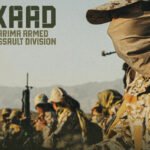
Jeeyand Baloch, spokesperson for the Baloch Liberation Army (BLA), claimed responsibility in a statement to the media for killing 20 Pakistani army personnel in 21 attacks in one week.
According to the spokesperson, Baloch Liberation Army sarmachars killed sixteen personnel of the occupying Pakistani army and four of its operatives in 21 attacks over one week. Sarmachars maintained control of important highways, while commercial vehicles and bridges were targeted under the economic blockade. The occupying army suffered heavy losses in attacks on its camps, while a network of informers involved in facilitating the occupying army was destroyed. One sarmachar was martyred in clashes with the occupying army.
23 September: In the Shadi Kaur area of Pasni, sarmachars killed Ehsan, son of Barkat, a resident of Shadi Kaur (Sindhi Pasu) and an important operative of Military Intelligence (MI), and seized his weapon and vehicle. This operative was found to be directly involved in facilitating the occupying army during military aggression in Shadi Kaur and the surrounding areas, and this collaborator had also been active in house raids and enforced disappearances. The occupying army had also tasked this collaborator with clearing routes and bridges.
25 September: At Tus Butt in the Daghari area of Quetta, Baloch Liberation Army sarmachars struck the occupying Pakistani army’s main camp at night in a coordinated attack. Sarmachars equipped with thermal and other modern weapons attacked the enemy camp simultaneously from three sides. In the attack, which lasted more than an hour, 9 enemy personnel were killed and more than seven injured, while the enemy also suffered heavy material losses. In these clashes, devoted BLA sarmachar Sangat Ghulam Nabi Baloch, alias Bolani, who was fighting on the front line, was martyred. The day after the attack, the occupying army tried to advance into the area, but sarmachars ambushed it; two occupying army vehicles were hit, inflicting further loss of life and property on the enemy.
The same day, in the Spilinji area of Mastung, sarmachars fired several rockets at an occupying army camp, inflicting loss of life and property on the enemy.
In addition, in the Dasht (Cher Kanchati) area of Turbat, sarmachars shot dead Abdul Wahab, son of Lal Bakhsh, a collaborator of the occupying army. Armed under the occupying army’s patronage, Abdul Wahab was running a network of facilitators for the occupying army in Dasht and the surrounding areas. He directly helped the occupying army violate the sanctity of homes, humiliate women and elders, and forcibly disappear young men.
26 September: On the RCD highway at Wadh in Khuzdar, sarmachars ambushed an occupying army convoy. Three enemy vehicles were hit in the attack, three personnel were killed and at least six injured.
The same day, BLA snipers targeted personnel posted at an occupying army camp in the Gidar area of Surab, killing two.
In addition, on the Kharan-Quetta main highway at Sotgan, sarmachars destroyed a main bridge with the help of heavy machinery. Besides blowing up another bridge on the same highway, a post used by the occupying army at Killi Karim Bakhsh was also demolished.
The same day, sarmachars took control of the CPEC route between Tejaban and Hoshab and carried out snap checks for hours.
27 September: On the Quetta-Taftan trade route at Nokchah in Chagai, sarmachars took a commercial vehicle and its goods into their custody.
28 September: On the main highway at Soro in the Mangochar area of Kalat, sarmachars targeted personnel of the occupying army’s bomb disposal squad in an IED attack, killing two personnel on the spot, while a main bridge was also destroyed.
The same day, on the Quetta-Taftan trade route at Chagai (Nokchah), sarmachars fired at a vehicle carrying minerals when it failed to stop, and then set it on fire.
In addition, from the Barshonki area of Kharan, sarmachars executed two operatives (Sudais, son of Muhammad Karim Mengal, and Junaid, son of Noor Muhammad Muhammad Hasni, residents of Barshonki) of a “death squad” run under the patronage of the occupying army’s Military Intelligence (MI) and Hafiz Mumtaz, under a ruling of the Baloch national court.
Sarmachars had taken both operatives into custody a few days earlier. During initial questioning they confessed that, after joining the ranks of a Baloch pro-freedom organisation, they had delivered a tracking chip to the mountain range in Kalat. After questioning and their confessions, sarmachars released them on their parents’ guarantee. However, after their release the two rejoined Hafiz Mumtaz’s gang, where they were given weapons and more tracking chips, three of which were delivered to the Lajay area, where drone bombing was later carried out. They confessed that they were also involved in facilitating the occupying army during this aggression, and had been secretly moving weapons for the army from Noshki and Kharan and clearing routes. The collaborators also revealed that they were involved in the killing of a man named Musa.
(It should be noted that Mehboob, son of Maula Bakhsh Mandai, who was linked to this network, was also taken into custody by sarmachars this month and executed after confessing.) Sudais and Junaid revealed the names and secrets of this network and of other male and female operatives of the occupying army in the area, who will soon be brought before the Baloch national court and brought to their end.
29 September: In Noshki city, sarmachars seized policemen’s weapons and targeted and destroyed spy cameras. On Monday night, a large spy camera installed by the occupying army on Eidgah Road in Noshki was also destroyed.
The same day, a roadblock and snap checks lasting more than five hours were carried out at Dali on the Kharan-Quetta route, while a roadblock and checks were also carried out at Gawarghan.
The statement said the claims made in recent days by the occupying army’s public relations wing (ISPR) of killing more than 71 people within a few days in Ziarat, Shaban and other areas are entirely fabricated, fictitious and contrary to the facts on the ground. These ridiculous figures and invented narratives are clear proof of the occupying state’s panic and defeated mindset after the severe humiliation inflicted by sarmachars on the battlefield, the devastating attacks on its camps and its heavy loss of life and property. Hiding defeat through false propaganda and diverting public attention from real losses is the old method of the Pakistani military machine.
In addition, the occupying state and its institutions are deliberately pursuing a policy of presenting the BLA as linked with other armed organisations in the region (such as Tehreek-e-Taliban Pakistan), to give the world the impression that they are all part of the same network. The sole aim of this artificial and deceptive publicity is to make controversial and distort, at the international level, the purely political, secular and national-freedom ideological struggle of the Baloch national movement.
He said we completely reject this propaganda and make clear in categorical terms that the Baloch Liberation Army (BLA) has no organisational, ideological or practical link with any other organisation, group or element apart from BRAS. The BLA is a completely independent, organised and nationally rooted freedom movement that is fighting solely for the freedom of occupied Balochistan, the protection of national resources and the achievement of a free, sovereign and prosperous Baloch homeland.
The spokesperson said such bogus claims and psychological tactics can neither weaken the sarmachars’ resolve and morale nor hide the real resistance under way in Balochistan. The Baloch nation and the international community know well that the BLA’s professional capabilities, coordinated strategy and control on the ground are the real cause of the occupying army’s decline and defeat.