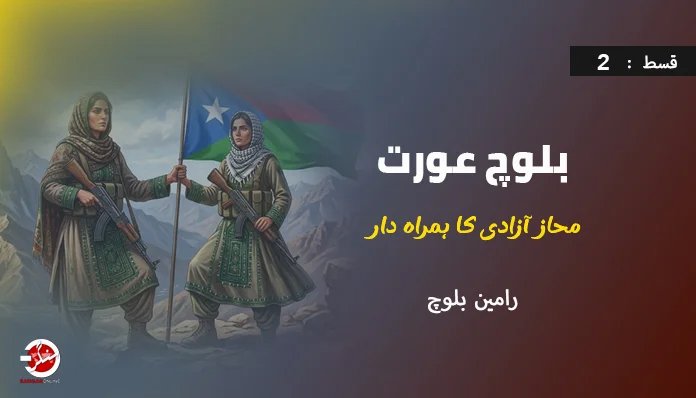
Part 2
Continued from the previous part
During Algeria’s struggle for independence, a Swedish journalist visited a French detention camp where thousands of Algerians were held. In his account he writes that among them was a seven-year-old child whose body bore deep marks of torture with iron wire. During the French soldiers’ raid on his village, his mother had been sexually assaulted, and his father and brother had been killed. When the journalist asked the child what his greatest wish was, the child replied: “The greatest wish of my life is that if an occupying French soldier ever falls into my hands, I will tear him to pieces.”
This child’s answer should not be seen merely as a child’s anger or desire for revenge. Behind it lies not only emotion but the pain, the scream, the voice of resistance of someone whose childhood, home, family and human dignity have been disfigured by colonial violence. Oppression does not wound the body alone; psychological and spiritual wounds run far deeper than physical ones, and these wounds settle into a person’s memory and nerves. They become part of the consciousness of generations. Oppression and coercion teach a person a great deal, and when a person is robbed of their honour, home, family and land, the anger born within them does not remain a mere emotional state; it becomes bound to the question of their existence and freedom.
The same question stands before Baloch society. Over more than half a century, how many bodies of Baloch fathers, brothers and sons have been mutilated? How many bodies have been cut to pieces? How many faces have had acid thrown on them to erase even their identity? How many thousands of the nation’s sons have been victims of enforced disappearance? How many Baloch sisters have been abducted, their dignity and honour violated, then subjected to enforced disappearance and a media trial, and how many derisive campaigns have been run against the Baloch freedom movement? How many sisters’ eyes were gouged out before their bodies were dumped, how many sisters’ characters were assassinated through derisive campaigns, and how many sisters’ democratic struggle and peaceful voices were crushed instead of being welcomed? How many were tried in puppet courts? How many were sentenced to life imprisonment behind prison bars? How many kind and caring guardians were buried without graves or shrouds in cemeteries for the unclaimed?
So, given the baseness of colonialism, can a Baloch daughter forget these events? Can a widow remove the memory of her husband from her life? Can a mother erase from her memory her son’s disappearance, the desecration of his body, or the nights spent waiting for him? How, then, can any colonial power or its agents expect a Baloch woman not to take up arms, simply because she is a woman?
Dozens of religious edicts may be placed before her, and hundreds of kinds of propaganda and narratives may be crafted claiming that a woman cannot fight, so that the occupier can continue its plunder, robbery and criminal aggression, commit genocide and impose collective punishment. But the question is: why can a woman, who belongs to the groups most affected by war, not fight? In freedom movements around the world, women have fought battles, led fighting organisations, taken up membership on military fronts, given medical aid to their comrades in arms and supplied them with reinforcements and provisions. This is part of Baloch history itself. In the distant Baloch past, women have led wars. During the Kambrani era, Mai Bibo, sister of Mir Ahmed Khan I, led the forces of the Baloch state, while in Western Balochistan a woman named Gul Bibi, who fought against General Dyer, was also a commander of fighters. And can an occupied society that has endured this pain generation after generation remove this bitterness and these tragedies from its national memory and forget them simply because someone says so? Memory is not only the past; memory shapes the present. Memory shapes the future.
The Baloch issue is not merely a question of deprivation. Deprivation itself is born of the terrible curse of slavery, and the immediate and practical solution to deprivation becomes the question of freedom. No social reconstruction can rid a people of deprivation. This problem is not solved by juggling figures and words or by presenting theses at rallies. It is a question of human experience.
Throughout history, various forms of resistance have emerged to end colonialism and the crimes it imposes, and counter-violence has been one of them; in some freedom movements it has been considered unavoidable against colonialism. Today we are suffocating, living at the mercy of a colonial existence. Can this brutal system remedy our suffering and our torments? Consider the Baloch woman who endures anaemia and malnutrition during pregnancy, the mother who dies in childbirth for lack of proper medical care, the child raised amid countless deprivations, the person who dies of hunger and undernourishment, the family denied basic healthcare: are all these merely numbers? No. Behind every number is a human being. A mother. A child. A home. A name. A life.
When the Baloch repeatedly ask why, despite having natural resources, farmland, the sea and minerals, a large part of their population lives in poverty, unemployment, malnutrition and without basic facilities, the issue is no longer simply one of poverty. It becomes one of ownership, authority and freedom, and this is exactly where the experience of deprivation connects to the question of freedom.
If a nation has no real authority over its land, resources, economy and political decisions, then merely saying that it should be given some economic facilities is not a complete solution. For a person does not live by bread alone; they also live by authority, freedom, dignity, identity and the right to decide their own future. Give a slave a comfortable chair, place gold bricks before him, put diamonds and jewels in his hands; but if he has no power to decide about his own life, his own land and his own future, does his artificial deprivation end?
And here the Baloch national question is no longer merely a question of poverty and employment. If a Baloch youth sees his deprivation only as a lack of jobs, the issue will be confined to economic reform. But if he sees it as a question of land, resources, authority, identity and political future, its nature changes fundamentally. This right cannot be exchanged for an economic package, a few jobs, a development project or temporary privileges. For a person whose authority over his own home has been taken away cannot be satisfied by having the walls of that home made beautiful.
A nation that has been robbed of the right to make decisions about its land cannot be diverted from the fundamental question, who is the owner?, by being given a few privileges.
That is why, if today’s Baloch youth, today’s Baloch woman, today’s Baloch son and daughter refuse to weigh the question of their freedom on the scales of economic interest alone, there is a deep historical and psychological logic behind it. They know the value of diamonds and jewels, the value of gold, the value of the sea, the value of land. But they also know that land is not just an economic commodity or a geography. Land is memory. Land is identity. Land is history. Land is home. That is why, even if a conscious, self-respecting Baloch is seated in a comfortable chair with diamonds, jewels and gold bricks laid before him, the demand for freedom will not end. Because the question is not what he is being given; the question is how much power he has to decide about himself.
He does not want to be merely the owner of wealth; he wants to be the owner of his land. He does not want merely to benefit from resources; he wants the right to decide about his resources. He does not want merely employment; he wants a future whose direction is set by his own freedom.
The occupying power often addresses the occupied nation in the language of comfort, development, privileges and a better future. It shows it dreams of educational opportunities, tempts it with study at universities in Europe and Oxford, and makes promises of jobs, development and economic prosperity. In this way it tries to create the impression that perhaps it has everything the occupied nation needs.
But here a fundamental question arises. The occupied nation can ask the occupier: who are you? You are a settler, an invader, a robber; so what can you give me? Who are you to set yourself up as the one who decides my fate and destiny? Who gave you the right to decide about my land, my resources, my politics and my future? You take away my freedom, exploit my resources, subordinate my life to your interests, and then present a portion of that same exploitation to me as privileges?
The real question here is not privileges but authority and freedom. Education handed out as charity is no substitute for freedom. Exploitative development is no substitute for prosperity. Privileges are no substitute for freedom. I am not asking you for donations or charity; I am asking for freedom. Why are you polluting my narrative? Why are you distorting my ideology? Why are you calling my war of independence a proxy war and terrorism? Why are you slinging mud at the character of the women fighters of my homeland? In fact, it is you to whom terrorism applies. I am the native; a settler who has come from outside cannot be my saviour or my sympathiser, though he can certainly be my executioner.
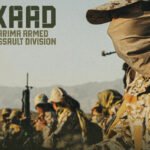
In a disputed and occupied region, the problem is not the young person who wants to go to Oxford, nor the education he wants to acquire. The problem is the colonial tactic of making education and privileges a substitute for the absence of freedom. A Baloch youth can study at Oxford, gain knowledge at the world’s best universities, study philosophy, politics and law; but if he mortgages his freedom and hands his future over to the occupier, his education is no substitute for freedom. Today’s educated youth are in the mountains. Today’s lawyer is on the battlefront, today’s engineer is fighting. Today’s gold medallist is fighting the war of independence. Who was Shari? Was she not educated? Was Zarina Baloch not a university student? Today’s Baloch women are philosophers, intellectuals and doctors educated at these very universities, who have become formal participants in the war of independence, and it is this very knowledge that has sharpened in the essence of their thinking the question: why can I not fight a defensive war for my homeland?
This is the change of consciousness that the occupying power fears most. Because it is no longer enough to tempt the occupied with what they are getting, or might possibly get in the future; they have now been consciously compelled to think about what has been taken from them. And once a member of a nation understands this difference, the glitter of privileges loses its place. The difference between a saviour and an executioner becomes clear to them. A person who enters your home, ends your authority, seizes your resources, takes away your freedom and then presents himself as your saviour by giving you a few privileges cannot be judged by the gifts he gives alone. He will have to be answered, on every front, in every trench, on every platform.
If a power toys with your destiny, takes away your authority and brutally exploits your resources, then instead of regarding it as a saviour, its role should be understood in the light of its criminal deeds. For a saviour is not one who occasionally provides comforts to a person held captive. A saviour is not one who tries to make the oppressed person’s subjugation acceptable by giving them privileges. Today’s Baloch activist is telling it without hesitation and without fear: “I do not want the comforts you give; I want authority over my own future. I do not want your patronage; I want my freedom. I do not want your kindness in my own resources; I want authority over what is mine by right.” Because bread from the very hand that bound the chain may fill the stomach, but it cannot give the chain the name of freedom. Because if I cannot decide about my own life, my own land and my own future, then what freedom do the comforts I receive amount to?
The real text is about the Baloch woman’s companionship with freedom. This question is not a product of today; the political and intellectual context in which Dr Allah Nazar raised it almost two decades ago has become more significant today than ever. The importance of this question is not that a woman is being seen on the battlefield for the first time, but that the woman being addressed has now herself entered the process of history. She is no longer a silent force watching the war from outside, waiting for its outcome or standing behind a male resistance fighter; she is herself part of the process of war.
The fundamental issue here is not women’s participation in war, but recognising the historical and political standing of that participation. If a woman’s presence in a national movement is regarded as merely incidental, secondary or supporting, she is in effect deprived of her active existence in history. The concept of national freedom cannot be complete until half of the nation is recognised at the centre of its struggle.
To see a woman only as a mother, sister, wife, heir of a martyr, one waiting for a prisoner, or a silent force standing behind a male resistance fighter is to limit her historical existence. This definition makes a woman a relationship, not an agent. If she is a mother, she is someone’s mother; if a sister, someone’s sister; someone’s wife; a martyr’s heir. But where is the woman herself in this conception? Where is her own history? Where are her own decision, her own conscious political action, her own sacrifice?
Colonialism does not only evict people from their land; it also distorts their historical standing. It tries to turn the subjugated, even in their own eyes, into beings incapable of deciding about themselves. In the vocabulary of colonialism, human beings are divided into predetermined categories: man, woman, ruler, ruled, conqueror, conquered, centre and margin. Within this division an extra burden is placed on the subjugated woman, because on one side she faces the oppression of the colonial power and on the other she struggles against the patriarchal structures within society. But to see the Baloch woman only as a captive of this double oppression would also limit her historical nature.
In the context of Baloch history, the Baloch woman is not merely a woman held captive by patriarchal structures; she is a historical being directly connected to the question of her society, her land and her national destiny. If she is part of the nation, her place in the struggle for national freedom cannot be partial either. If the nation’s existence is shared, the responsibility for freedom is shared too.
Here women’s involvement in war should not be considered important merely because it increases the strength of the movement. More fundamental is that women’s participation itself changes the meaning of freedom. When a woman enters the field, freedom is no longer only the freedom of land; it becomes the question of the nation’s freedom. And when a woman enters history with her own existence, will and consciousness, she challenges not only the colonial occupation but also all the structures that want to keep her confined to roles of silence, waiting and submission.
That is why calling women’s participation “help” is inadequate. Help always revolves around some other centre; agency creates its own centre. If a woman is only a helper in a man’s war, then the centre of the war is still the man. But if the woman is herself an agent of the political and historical struggle for freedom, the very meaning of the war changes. In that case the woman is not advancing a man’s goal; she is taking part in a shared historical process of freeing her own existence and the nation.
To regard the Baloch woman’s participation in war as an incidental event in a national movement is an intellectual error. This participation itself shows that the idea of national freedom is creating a new human meaning within itself. When a woman steps out of silence, she does not merely abandon a social role; she breaks the entire political structure of silence in which she has been kept for centuries.
And here the meaning of war also changes. War is not only about taking up the gun. War is also of consciousness, against fear, against silence, against forgetting. The woman who presents her existence before history challenges, from that very moment, the colonial notion that wants to keep her apolitical, ahistorical and confined to private life. In this sense a woman’s resistance is far wider than the battlefield; she is also at war with the structure of society that is used to recognising her only through a man’s identity.
Therefore it is not enough to call the Baloch woman merely the heir of a martyr. She is herself both an heir of history and a maker of history. To call her merely one waiting for a prisoner is to freeze her existence in waiting. To call her merely a mother is to dissolve her political existence into a maternal relationship. To call her merely a wife is to absorb her into another person’s identity. And to call her merely a force standing behind a male resistance fighter is to deny her own agency. A woman is not a silent force standing behind someone; she is an active force standing within history itself. Women’s participation must be understood not at a merely symbolic level but in its full political, human and historical meaning. For including women in war and recognising women as agents of war are two different things. In the first case the movement needs the woman; in the second the movement recognises the woman’s historical existence.
No idea of freedom can be complete until human beings themselves become the subject of their own freedom. By the same principle, the Baloch woman is not merely the one addressed by freedom; she is an agent of freedom. She is not waiting for the promise of some future in which freedom will come and only then will her question be raised. Her very presence declares that the process of freedom is under way now, at this moment, within human existence. And perhaps this is the most fundamental philosophical meaning of this question: if a woman is part of the nation, her participation in the war of independence cannot be incidental. If she is part of the nation’s existence, she will also be part of the decision for freedom. And if she is part of the decision for freedom, she is not merely a participant in the war but an agent of it.
Women’s political participation is not a new or unusual idea. Looking at freedom movements, revolutions and various periods of political and democratic struggle in human history, women repeatedly appear at the centre of political and armed action, sometimes leading protests, sometimes becoming the face of resistance, and in some historical circumstances becoming part of armed struggle as well. To see women’s political participation as an extraordinary event or a temporary necessity is therefore to ignore the wide experience of history. The real question is not why women enter movements and politics; the real question is why it has been felt necessary to keep them out of politics and movements.
Rosa Luxemburg is a prominent example. She took part in political theory, the workers’ movement and revolutionary debates not merely as a woman, but as someone who intervened intellectually in the fundamental political questions of her era. Her importance lay in the fact that she did not see politics merely as the pursuit of power, but as the interrelation of public consciousness, collective action and revolution. Here the woman is not subordinate to political action but becomes a force shaping political thought.
Similarly, the work of Simone de Beauvoir takes the question of women’s political and social standing to a different level. In her well-known book The Second Sex, she examined how women’s social standing is shaped through historical, cultural and social conceptions. Her work gave fundamental importance to the question of which of the established ideas about women arise from the complexities of human experience and which are shaped by social power structures.
Aung San Suu Kyi played a prominent role in Myanmar’s politics. Her political life points to the broader reality that women’s political presence has taken different forms in different societies and political systems. Likewise, Lakshmi Sahgal led the women’s regiment of the Indian National Army during India’s freedom struggle. Here the woman appears as an agent leading an organised political and military effort.
In the history of Palestinian resistance, the role of Leila Khaled also brings out one aspect of this discussion. She became a well-known figure associated with the Palestinian armed movement. Her presence is an example of how, even in national conflicts and armed political struggle, women did not accept the position of mere victims or spectators but gained a prominent place within political action itself.
The fundamental issue here is not agreement or disagreement with the political strategy of any particular movement or figure. The fundamental issue is acknowledging the historical reality of women as political agents. The study of history does not allow women always to be seen as oppressed, as mothers, wives or victims, with their political decisions, ideological role and collective action regarded as secondary.
Algeria’s struggle against French colonial occupation is an important historical experience in this respect. Algerian women played political, military, organisational and other roles at different stages. These roles cannot be limited to a single activity or a particular field. Women were present at times in carrying messages and organising, at times in urban resistance, at times in political activity, and in some circumstances they also joined the armed struggle.
When a colonial system subjugates a nation, it does not subjugate only the men. Colonialism takes the whole society into its grip. That is why resistance also arises from different parts of society. When a woman rises against colonialism, she is not merely joining some man’s war; she is consciously taking part in her own national war.
In Vietnam’s history of independence and war, women also played various roles in political organisation, resistance, medical services, supplies and other fields. War mobilises an entire society, and so a wide variety of roles emerge within it at political, social, medical, organisational and economic levels.
The same holds true for various movements in Latin America. There, women played a prominent role in protests against authoritarian governments, in the struggle for human rights and in demands for democratic change. In some movements the focus of their struggle was political freedom, in some human rights, in some resistance to state repression. But within all these experiences one shared reality remained: women did not see politics merely as something to watch; they made politics their field of action.
In the history of Kurdish political and armed movements, too, women’s participation has appeared in different forms: in political organisation, ideological debate, social movements and in some armed organisations. Here too, a woman cannot be seen merely as the relative or backing force of a male resistance fighter. She has maintained her own distinct presence in organisational structures, ideological debates and political struggle.
The historical circumstances of Vietnam, Palestine, Latin America and the Kurdish political movements are not the same as one another either. But despite these differences there is a fundamental continuity: women have not remained outside the process of history. That is the real point.
To regard women’s political participation as a feature of one ideology, one movement or one region is to limit history. In different societies, women have taken part in struggle for different reasons, in different circumstances and under different political ideas. In some places their role was tied to national freedom, in others to class struggle, democracy, human rights, or resistance to colonial rule. But everywhere, this participation broke the artificial distance between women and politics, according to which politics was a man’s domain and a woman’s role was confined to the home. If women are half of society, how can their participation in society’s freedom be secondary? To accept women as part of the nation and then regard them as mere helpers in the national struggle is an internal contradiction. Likewise, to acknowledge a woman’s sacrifice but not her political agency is also a contradiction. If a woman experiences oppression, she also has the right to decide against oppression. If she bears the consequences of war, her voice must also be fundamental in decisions of war and peace.
In this sense, the experience of movements around the world teaches a fundamental lesson: women’s political participation is not an exception; it is part of history. And wherever women have played their role in history, they have not only given strength to the movement but have also broadened the very meaning of politics.
Therefore the political and national struggle of the Baloch woman cannot be seen as an extraordinary or secondary event either. It must be understood within the same broad continuity of history in which women, in different eras and different geographies, have asserted their existence not merely as a social relationship but as political agency. Because when a woman enters history, she does not merely add a role; she changes the way history is written.
To be continued…
***