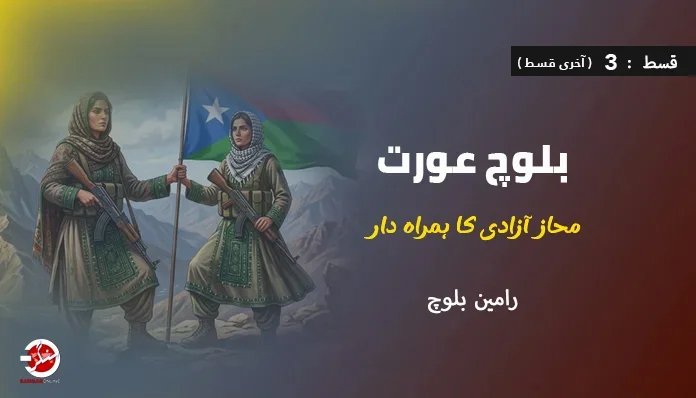
Part 3 (final part)
Continued from the previous part
The evolution of consciousness is a continuous process that moves alongside human history. It is not a static state but a process shaped by human experience, labour, observation, life and changing circumstances. Human beings do not simply accept their environment; they interact with it, try to understand it, change it, and in the process of that change they change themselves too. In this way a continuous dialectical relationship exists between human consciousness and material conditions. People create conditions, and those conditions in turn influence human thought, attitudes and collective consciousness.
In this context, it is not enough to see human history as a mere collection of events. History is in fact the story of continuous interaction between human beings and the social structures they create. Every era produces its own economic, social, political, cultural and moral concepts, but over time, when human experience begins to go beyond the limits of these concepts, a contradiction arises between old concepts and new experiences. This contradiction becomes one of the basic forces of social change.
This is where the concept of dialectics becomes important for understanding human history. Dialectics does not mean mere conflict; it means understanding the interrelation, struggle and process of change among opposing forces, ideas and conditions. Human consciousness also expands as it passes through its historical experience. What is considered beyond question in one era can become open to debate in the next in the face of human experience and new questions.
The idea attributed to Ted Grant that “matter became conscious of itself in the human mind” points to the concept that the human being is not a transcendent existence separate from nature, but part of the historical development of the material world itself. Human consciousness arises from this material world, but once it arises it no longer remains merely its reflection; it also gains the capacity for action, creation and change. By understanding their conditions, people try to change their relationship with them, and it is this process that keeps history moving.
Movements, wars, crises and conflicts are also complex manifestations of this historical process. It is not correct to say that every war necessarily produces progress, but freedom movements are naturally and logically fought to open the way to freedom and social reconstruction. History has also seen movements and wars whose results were complex, contradictory or destructive. However, revolutionary wars, freedom movements and national conflicts, especially in colonial and imperialist conditions, often bring to the surface contradictions that remain hidden in the background in normal times.
Such wars and movements do not only change political or strategic maps; they also affect social consciousness, relationships, values and identities. They can be compared to a kind of “surgery” on society. Just as surgery brings to light a disorder inside the body that was apparently hidden, movements too expose the contradictions born of the imposed colonial system. Class relations, gender divisions, the centres of colonialism and traditional concepts come out in clearer form. At this stage, the question arises among different parts of society as to which values were shaped historically and which there is no necessary reason to regard as eternal and unchangeable.
Baloch society can also be seen in this historical and dialectical context. This society was not formed as the result of a single era or period; it is the result of the interaction of various historical experiences, tribal and colonial conditions, religious concepts, imperialist interventions, wars, political circumstances, literary traditions and collective experiences. The present form of any society is in fact the sum of all these historical layers.
The position of women provides a very important angle for understanding this historical formation. As in many societies in the world, ideas about women in Baloch society did not arise merely from biological difference; historically, outdated tribal, colonial and religious interpretations played a role in shaping them. In some periods, religious interpretations, outdated social traditions, concepts of honour and gender division limited the sphere of women’s lives. Various restrictions and ideas arose about women’s movement, education, political and military activity and participation in public life.
A basic distinction is necessary here: it is not academically correct to regard religion, religious teaching and a particular historical interpretation of religion, or the tribal structure created by Sandeman and colonialism, as one and the same thing. Likewise, it is not correct to regard any one social tradition as uniformly representing the whole of Baloch society. Society is always diverse, and within it different, and sometimes mutually conflicting, ideas exist at the same time.
Ideas such as “nang o namoos” (honour and modesty) about the Baloch woman are also part of this complexity. On the one hand, these ideas can appear as expressions of social identity and moral responsibility; on the other, when a woman’s honour is tied not to her own autonomy but to the family or male social authority, the same idea can also become a means of restricting women’s freedom. The real question here is whether the centre of honour is the woman’s own personality and agency, or whether she is seen as the property of another individual or collective structure.
In the present era, political and social consciousness has created new possibilities for the Baloch woman. As a result, it is natural for a new contradiction to arise between traditional gender concepts and new experiences. When the Baloch woman stepped out of the limited world of the home and began to appear in politics, journalism, social activism, organisational work and the various fields of the national struggle, the effect of this change was not limited to the woman herself but extended to the whole social and political structure.
Today, when the Baloch woman comes forward to express her political and social agency, forces with conservative and colonial mindsets raise various questions about her role. Sometimes it is called the result of “brainwashing”, sometimes it is linked to foreign funding, blackmail, psychological pressure or emotional influence. The problem with these claims is that they refuse to see the woman as an autonomous political and intellectual agent.
To understand the Baloch woman’s decisions, it is necessary to give importance to her own struggle, her experiences, her social and national conditions and the motives she herself states. Declaring any individual’s political decision unreliable merely because she is a woman is itself gender prejudice.
Social change does not always come from outside. Sometimes the greatest change arises from within society. A new generation asks old questions in new ways, gives new meanings to old experiences and re-examines limits that previous generations may have considered beyond question. In this process, a civilisation produces new forms from within itself.
In this whole process, the relationships between the state, society, tradition, religion, family and the individual also come up for fresh debate. A change that is an expression of freedom for one person may feel like the breaking of tradition to another. This contradiction makes social change complex, but the movement of history is hidden in this very complexity.
The evolution of consciousness is not the property of any one individual, party or institution. It is the collective result of human experience. Society passes through its contradictions, places its old ideas before new experiences and then moves towards a new intellectual form. The great outcomes of history are often not clear in their early moments.
That is why the changing role of women in Baloch society also needs to be understood within a broad historical process. This is not merely a women’s question; it is a question about the definition of society, the distribution of power, the limits of tradition, the effects of modernity and the concept of human autonomy. When a part of society that has long been kept within a limited sphere physically appears on the front of freedom, its effects are not limited to that part alone.
There should be no fundamental difference in human worth between woman and man. In political, social and property rights too, no fundamental discrimination on the basis of sex is defensible. Intelligence, resolve, courage, love, creativity, sacrifice and bravery are not the preserve of one sex. Just as a man can make sacrifices for his homeland, his nation, his ideology or his cause, a woman too can stand with her whole being for the national cause, resist and influence the course of history. The difference of sex may be a biological fact, but making it a measure for ranking human worth, political authority and moral status is defensible neither morally, nor logically, nor in terms of human experience. A difference of body is not a difference of human worth, just as a difference of height is not a difference of intellect, a difference of voice is not a difference of consciousness, and a difference of physical build is not a difference of human dignity.
The real problem is that human society turned the natural difference between woman and man into a social hierarchy. Nature created differences between the sexes, but society built a whole edifice of domination around those differences. Instead of seeing the woman as a complete human being, she was tied to a relationship, family, tribe, man or collective honour. In this way, the woman’s own self faded into the background, and a wall of roles was built around her in which daughter, sister, wife, mother, honour, modesty, reputation and pride were all present—but where was the human being? Where was the individual? Where were her own will, desires, disagreement, decisions and dreams?
This is where the idea of “mastoorat” (the veiled ones) arises. A woman was born, not “mastoorat”. Nature gave the woman a body; society created meanings around that body. Nature gave her desire; society turned desire into shame. Nature gave her love; society made love a matter of honour. Nature gave her the capacity to disagree; society turned disagreement into rebellion. Nature gave her agency; society declared agency to be against the family’s honour. In this way a living human being was turned into a social role, and then that role was made so sacred that the human being herself was lost inside it.
Here the concepts of “ghairat” (honour) and “nang o namoos” must also be tested by the same intellectual standard. What, after all, is nang o namoos? How does one adult person’s personal decision lower another person’s honour? If a woman of her own will chooses the battlefront for her national cause, why does this lower the honour of her brother, father, husband, society or tribe? If she does not accept a relationship, why is a man’s manhood wounded by her refusal? If she makes the decision about her own life, why is that decision called a disgrace to the family? If one person’s honour comes to depend on another person’s body, love and agency, then this honour becomes less a moral concept and more a concept of ownership.
This is where the concept of ghairat reveals its dialectical reality. Ghairat is outwardly wrapped in a moral cloak, but within it lies a concept of ownership and monopoly. If a woman’s self is regarded as the collective property of a family, man or tribe, then her love, clothing, movement, marriage, relationships and political and national activity all become matters of “honour”. But when the same colonial power rapes that woman, the ghairat of some broker or hanger-on is stifled, because he does not feel anger towards the powerful; his anger is applied only to the weak. That is why the woman’s self becomes an arena where male power and ghairat prove their presence. A woman’s silence becomes “modesty”, a woman’s obedience becomes “goodness”, and a woman’s disagreement is declared “immorality” or “rebellion”. The question still remains: if a woman’s silence is morality, what is a man’s silence? If a woman’s disagreement is rebellion, what is a man’s disagreement? If a woman’s love is a threat to the family’s honour, under what moral law does a man’s love remain innocent? If a woman’s will is suspect, why is a man’s will regarded as a natural right? This double standard makes any moral system contradictory from within.
To get out of this outdated state, we do not need to make woman and man enemies of each other. The problem is not men, but the social logic that gives one human being power over another. The problem is not any individual, but the outdated structure that distributes power in the name of sex, family, tribe, religion or state. That is why the real question is not how the woman will become equal to the man; the real question is why it is so difficult to recognise a human being as a human being.
The same question arises with full force about Baloch society. A particular image of the Baloch woman has been put before us: silent, veiled, confined, guardian of the family’s honour, bound by the man’s decision and taking part in collective life only as far as male society considers appropriate. This image is then given the name of “Baloch tradition”. But invoking tradition does not make a claim historical truth. We must ask: which tradition? Tradition of which period? Of which class? Of which power? And a tradition born of which historical need?
No living society is of a single colour. Baloch society too has been shaped by different periods of history, different class conditions, different political experiences and different power relations. It has resistance as well as oppression, love as well as restriction, elements of equality as well as male domination. That is why it is necessary both to recognise the elements of human freedom, equality and resistance within this society and to challenge the forces that deprive people of their selves.
The purpose of tradition should not be to imprison people but to preserve human experience and pass it on to new generations. If a tradition imprisons people, changing it is not betrayal of tradition but loyalty to humanity. If an ancient custom destroys human agency, its antiquity does not make it moral. Being old is not proof of being true. Living nations do not preserve their traditions in museums; they keep them alive, change them, engage in dialogue with them and choose from them the elements that broaden human life.
The Baloch woman can love. This is not a matter of honour but a human reality. Love is among the basic experiences of human beings. If a Baloch man can love, why not a Baloch woman? If a man can choose a life partner of his choice, why not a woman? If a man can write poetry, listen to music, travel and express his love, why does a woman’s love suddenly become a matter of honour? Dividing love into legitimate and illegitimate according to sex is in fact a decision not about love but about power. In love, the woman’s will is just as important as the man’s. Her saying “yes” is her right, and her saying “no” is also her right.
Likewise, the Baloch woman can become a musician, can be a poet, can play an instrument, sing songs, become a writer, become a researcher, can be a fidayee, become a sarmachar, be a political activist and take part in the various fronts of the national struggle. If the Baloch are made by history, civilisation, culture, poetry, music, folk tradition and collective expression, how can Baloch freedom be called complete while keeping the Baloch woman outside freedom and the collective struggle?
The Baloch woman can study, can question, can debate, can research, can fight. War has no sex, and moral and political decisions about war or resistance cannot be determined on the basis of sex alone. Bravery is not the property of one sex; it is a human possibility. If a man can take risks for his nation or for a cause, depriving a woman of that possibility merely on the basis of sex is logically indefensible. A woman too can give her life, save lives, build a political organisation, put forward an ideology, write and influence history.
If the Baloch nation wants freedom, the question must also be: is freedom only for men? If we tell the foreign occupier not to take control of our lives, our land and our decisions, why can’t the same principle apply within our own society? If external oppression is oppression, how will calling internal oppression tradition change its nature?
The greatest test of national freedom is not only at the border but in the concept of the human being. A nation cannot be completely free as long as, within it, the worth of a human being remains subordinate to some external power, tribe, family, sex or religious authority. If a Baloch man demands freedom against state oppression but does not recognise the will of his sister, daughter or wife, there is a fundamental contradiction here. He is rejecting occupation from outside but maintaining a small form of domination inside the home.
This is where religion, tribalism, colonialism and the state must all be tested by the same moral standard. If an order restricting a woman’s life comes in the name of religion, it must be questioned. If it comes in the name of tribal tradition, it too must be put in the dock of history. If it comes in the name of some law, it must be tested by the measure of human freedom. And if some colonial arrangement or political interest has strengthened social restrictions, that historical link must also be understood.
Likewise, it is not correct to regard religion as a uniform and static historical force. Interpretations of religious traditions have varied, and different societies have used them in different ways. The problem arises when a particular social interpretation makes itself an eternal truth and begins to limit people’s basic agency. There, questioning becomes necessary, because a question is not hostility towards people but a sign of consciousness.
Today, when it is said that a woman going out into the field of war or resistance is against “ghairat” or contrary to religious teachings, we must ask: should the permission or prohibition of a political or moral act be decided on the basis of sex? If war is wrong, it should be wrong for men too; if resistance for a particular cause is considered legitimate, a woman cannot be excluded from that moral decision merely on the basis of sex. This is logical consistency.
We do not need to make the woman “like a man”. It would also be a wrong idea that equality means a woman abandoning her identity and entering a man’s mould. Equality means that both have equal worth with their own humanity. A woman is a complete human being while remaining a woman. She does not need to become like a man to prove her humanity.
Likewise, the issue is not one of seeing women as a separate class. The basic question is whether a human being is the owner of her own self or not. If a human being is the owner of her own self, this principle will apply to women as well as men. If a human being can make decisions about her own life, so can a woman. If a man has the right to decide about his love, education, politics, profession, clothing and travel, a woman too must have the same human agency.
Human freedom is not the exclusive right of any sex; human agency arises from being human.
At this stage we must also ask whether traditions were made to imprison people or to protect their historical freedom. If a tradition imprisons people, changing it is not betrayal of tradition but loyalty to humanity. A tradition that looks at the past not with hatred but with awareness, tests wrong traditions not with reverence but with criticism, and builds the future not out of fear but out of human possibility—that is a living tradition.
And this is where the concept of the Baloch woman also changes. She no longer remains merely some man’s mother, sister, wife or daughter; she is a human being herself, with her own self, her own intellect, her own love, her own decisions, her own politics, her own creativity and her own history. She can love, she can refuse, she can sing songs, play an instrument, write a book, read a book, play on the field, do politics, take part in the national struggle and make decisions about her future. None of these acts makes her any less Baloch.
Indeed, perhaps the maturity of Baloch society will begin on the day when a Baloch woman’s individual agency is seen not as against the honour of the Baloch nation but as the honour of the Baloch human being. Because, in the end, a woman’s honour is not to be shut inside some sacred glass case. Honour is to be regarded as a human being. Modesty does not mean silence. Ghairat does not mean ownership. Namoos does not mean possession of a human being. Tradition does not mean stagnation. Religion does not mean silence on every human question. Nation does not mean slavery of the individual. And freedom does not only mean that a nation escapes the control of an occupier. The broader meaning of freedom is that a human being can live with her own existence, think with her own mind, decide by her own will and also bear the responsibility for her decisions herself.
If the walls that imprison women stand in the name of tradition, tradition must be questioned. If they stand in the name of ghairat, the definition of ghairat must change. If they stand in the name of tribalism, tribalism must be tested by the measure of human and national freedom. If they stand in the name of religion, religious interpretation must face academic and moral questions. If freedom is truly freedom, the Baloch woman cannot be an exception to it. She is a complete human being of that very freedom.
The end
***