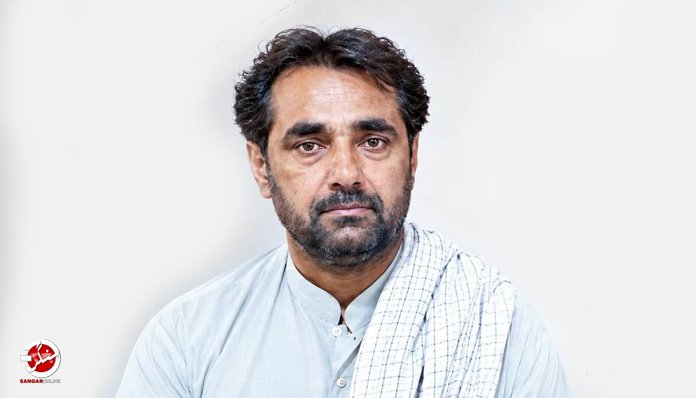
Paank, the human rights department of the Baloch National Movement (BNM), has issued a report expressing deep concern over the target killing of Dr Abdul Rasheed Baloch, alias Nokap Baloch. Dr Nokap was a doctor, teacher, political activist and member of the BNM Central Committee. According to information provided by his family and verified by the Paank team, Dr Nokap was killed at his residence in Shamsar (Haqabad), Western Balochistan, on the morning of 11 September 2026. An eyewitness told Paank that two armed men came to his guest house posing as patients and then shot him dead. According to the report, the attackers belonged to a death squad operating under the patronage of the Pakistani army.
Dr Nokap was born in 1982 in Gandachai, Kolwah, Awaran district, and devoted most of his life to education and public service. According to Paank, he taught children as a volunteer for several years in the nearby village of Kanechi, where local schools lacked teachers, and later provided free medical treatment to his community. He joined the BNM in 2010 as one of the first members of the Kolwah region, served as vice-president and then president of the Gishkaur zone, was later elected president of the Gandachai zone, and in 2022 was elected a member of the BNM Central Committee, a post he held until his martyrdom.
The report also sheds light on the history of reprisals against Dr Nokap. According to his family, during a military offensive in 2016 the Pakistani army demolished his house and looted his property, and there were also attempts on his life. Because of constant threats, he was forced to leave his home in 2018 and move to Western Balochistan. Despite this forced displacement, he continued to provide free medical care and education to Baloch refugees and local people in remote and deprived areas, giving vulnerable families basic services that would otherwise have been beyond their reach.
Paank said that because this killing took place outside Pakistan, it raises serious concerns about the cross-border targeting of Baloch political activists and refugees. The organisation called for an independent investigation into the identity and affiliation of those responsible, the chain of command, the planning and execution of the attack, and any links to Pakistani state, military, intelligence or security institutions. Paank stressed that medical professionals and teachers serving displaced communities must be protected, and that providing health and education services should never make anyone a target of oppression or violence.